
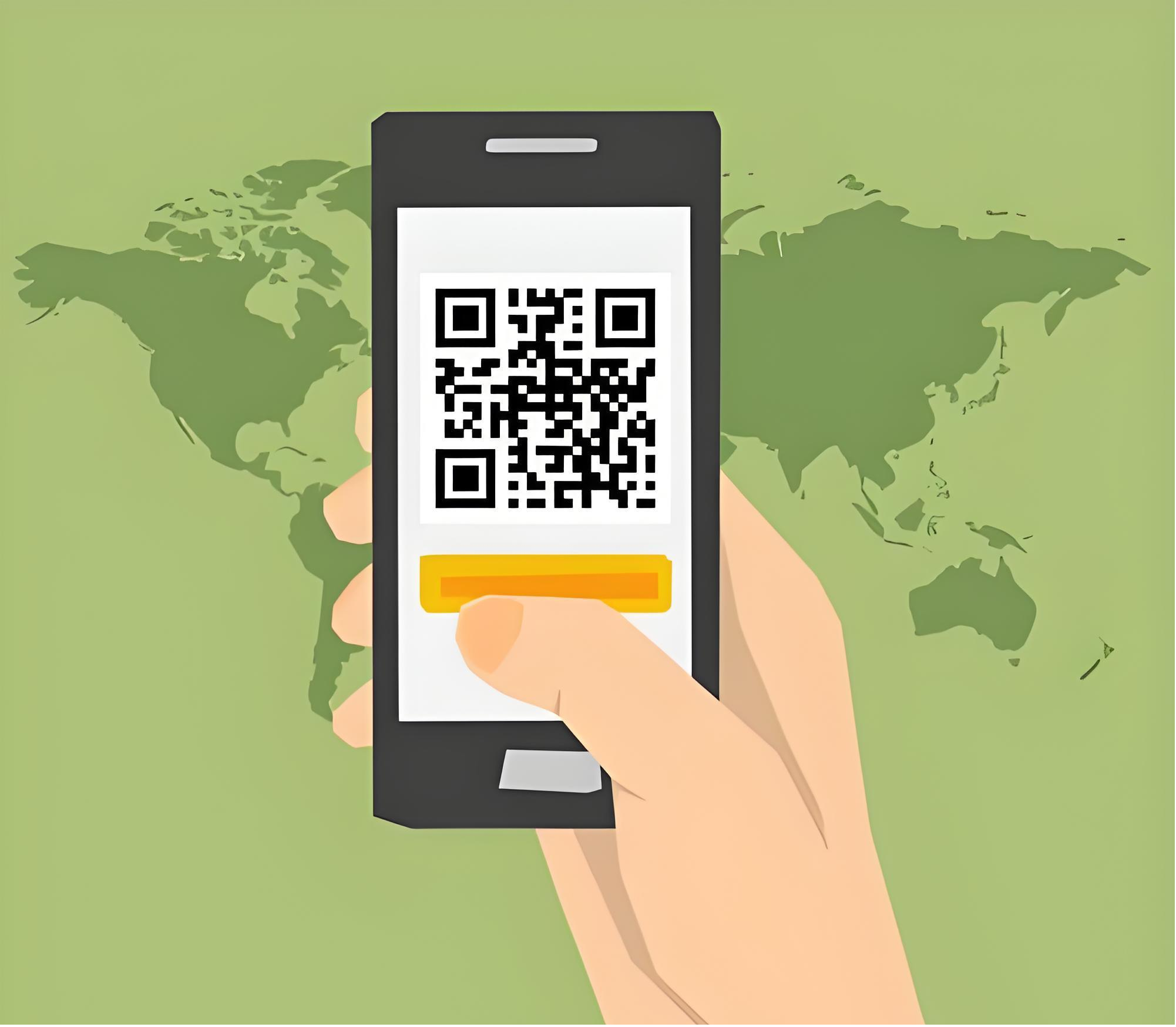
From Scanning to Connect and Full-Chain Traceability: How QR Codes Reshape Digital Life?
A simple scan with WeChat allows you to join a community, check in, or verify product authenticity; on factory floors, scanning a QR code tracks production progress and verifies material information; even daily office tasks like onboarding guidance and document sharing can be done in one click via QR codes… Today, this tiny black-and-white square has long permeated every corner of business operations, enterprise management, and daily life, evolving into a super gateway connecting the physical world and digital space.
I. The Past and Present of QR Codes: More Than Just an “Upgraded Barcode”
Many people assume QR codes are a product of the mobile internet era, but their origins actually date back to 1994. Back then, Japan’s Denso Wave developed this two-dimensional barcode capable of storing far more information to solve the challenge of tracing auto parts. Unlike traditional barcodes, which only store numbers and letters, QR codes use a matrix arrangement of black-and-white pixels to hold various data types—including text, images, links, and coordinates—with a storage capacity dozens to hundreds of times larger than that of barcodes.
Its core principle is straightforward: data is converted into a combination of black-and-white modules following specific encoding rules. Scanning devices (such as smartphones and PDAs) then interpret the module distribution using image recognition technology and restore it into readable information. The QR (Quick Response) codes we use today have further optimized scanning speed and error tolerance, remaining scannable even when partially damaged—this is the key to their widespread popularity.
Over more than two decades, QR codes have transformed from a specialized industrial tool to a universal application, evolving from their initial use in industrial traceability to the explosive growth of mobile payments, and now to full-scenario digital applications.
II. Full-Scenario Penetration: A Guide to 6 Core Applications of QR Codes
Nowadays, QR codes are far more than just a tool for “scanning to pay”. In enterprise operations and daily life, they are unlocking an increasing number of practical scenarios, acting as an invisible engine for efficiency improvement.
1. Business Operations: A Closed-Loop Tool for Lead Generation and Conversion
Whether for brand promotion or event execution, QR codes bridge the gap between offline reach and online conversion. Custom QR codes for industry or interest groups can be shared online in communities and posted offline at exhibitions to quickly gather target users; event QR codes digitize the entire registration and check-in process, eliminating the hassle of manual verification while collecting user data for targeted recommendations later; embedding QR codes in corporate e-business cards enables one-click sharing during business negotiations, facilitating rapid business connections and consistent brand image building.

2. E-Commerce and Consumption: Restructuring Shopping Experiences and Trust Systems
Scanning a QR code to view product details and brand stories, or even making direct purchases after experiencing “virtual try-ons” online—QR codes significantly shorten the consumer decision-making journey. More importantly, anti-counterfeiting and traceability QR codes serve as a reassurance for consumers: scanning the code on a product tag reveals production batches, authorized distribution channels, and authenticity verification results, with a one-click option to report counterfeit goods. For brands, this not only prevents unauthorized distribution and counterfeiting but also builds brand credibility.
3. Enterprise Management: Boosting Both Efficiency and Security
Within enterprises, QR codes are a powerful assistant for digital management. New employees can scan codes to access onboarding materials and log into office systems, enabling quick integration into work; affixing QR codes to fixed assets allows staff to check procurement details, usage status, and custodians, avoiding misappropriation and mismanagement; on production floors, work order QR codes connect the entire process of cutting, sewing, and quality inspection, with scans recording progress and tracking accountability; in warehouses, QR code scanning enables fast inbound/outbound operations and intelligent inventory checks, improving efficiency by over 50%.

4. Supply Chain Collaboration: Breaking Down Information Barriers Across the Entire Chain
From fabric procurement to finished product delivery, QR codes enable information sharing across every link of the supply chain. Suppliers can scan codes to access dedicated portals, check order requirements, and submit delivery documents; attaching QR codes to fabric rolls allows real-time tracking of material flow; in logistics, QR codes on carton shipping marks link to order information and delivery addresses, enabling quick verification and sorting through scanning, reducing transportation errors.
5. Life Services: Simplifying Processes for Direct and Convenient Access
Visitor registration and appointment-based access via QR codes replace traditional manual record-keeping; job seekers scan codes to view positions and submit resumes, greatly enhancing recruitment efficiency; employees scan codes to book medical check-ups and claim holiday benefits, ensuring accurate distribution of perks; VIP members scan codes to access customized profiles and exclusive privileges, maximizing their sense of premium service. QR codes replace cumbersome procedures with a scan-and-go model, making life more efficient.
6. Community Interaction: Gathering Like-Minded People and Stimulating Co-Creation
Forum QR codes created around trending topics or industry discussions can be posted at the end of articles, in communities, or on posters. Users scan the codes to participate in posting and commenting, quickly bringing together people with shared interests. Whether for industry exchanges or hobby sharing, QR codes build efficient interactive platforms, enhancing user stickiness and community activity.
III. The Future Is Here: Three Key Development Trends of QR Codes
As technology continues to evolve, the application boundaries of QR codes keep expanding, with three major trends emerging in the future:
1. Continuous Upgrade of Security Levels
To address information leakage risks, dynamic and time-limited QR codes will become mainstream—their content can be updated in real time and set with expiration dates, automatically becoming invalid once expired. In high-sensitivity scenarios, encryption technology and biometric verification will be integrated to ensure information security.
2. Innovation Through Multi-Technology Integration
QR codes will be deeply integrated with technologies such as AI, IoT, and AR: scanning a code will trigger AR virtual displays for more intuitive product experiences; integration with IoT devices will enable users to control smart devices and check their operation data via scanning; leveraging AI data analytics, user profiles can be accurately created based on scanning behavior, enabling more precise service recommendations.
3. Deepening Cross-Scenario Applications
QR codes will evolve from single-function tools to full-chain service carriers. For example, a product’s QR code will not only enable anti-counterfeiting and traceability in the future but also link to after-sales repair, trade-in, and membership points services. In enterprise management, QR codes will cover the entire employee lifecycle—from recruitment and onboarding to daily work and offboarding—becoming a core pillar of digital management.
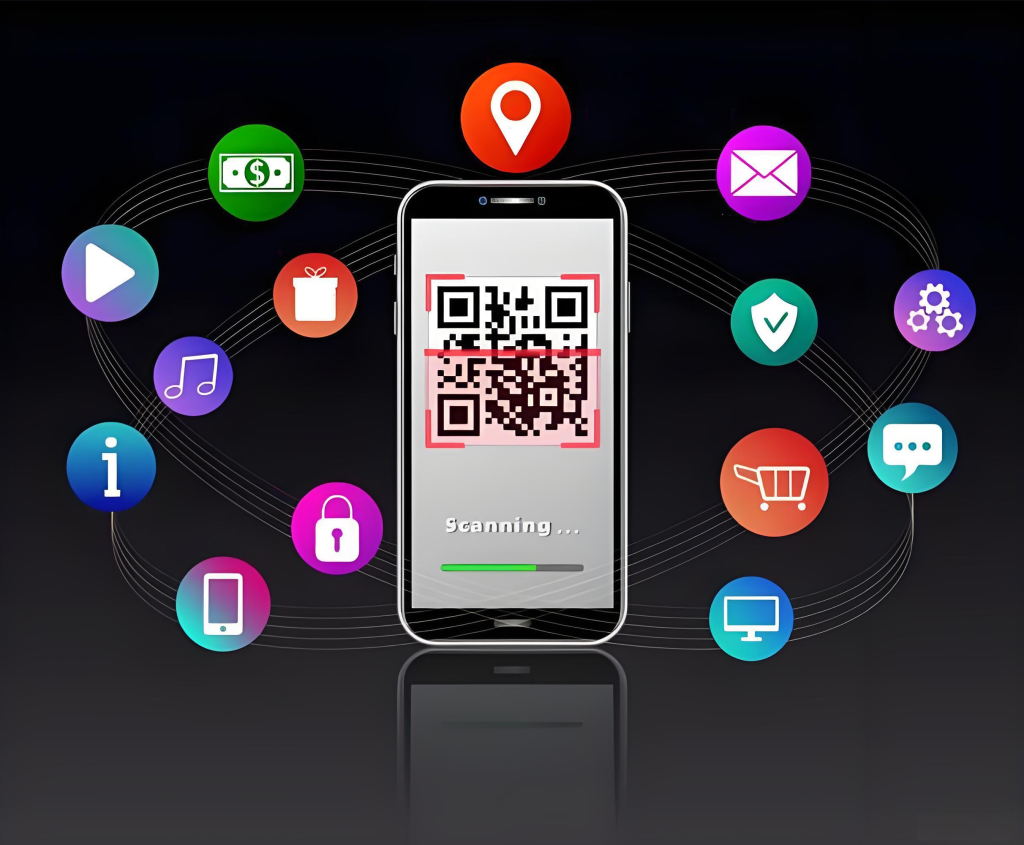
This tiny black-and-white square, though seemingly simple, embodies the powerful ability to connect everything. It has not only changed our way of life but also become the infrastructure for enterprise digital transformation. In the future, as technology advances further, QR codes will unlock more possibilities, continuously empowering efficiency improvement and experience optimization, and making digital life more convenient and intelligent.