Beyond Retail: How Fashion Brands Leverage WordPress and LinkedIn to Build Industry Authority and Growth Engines
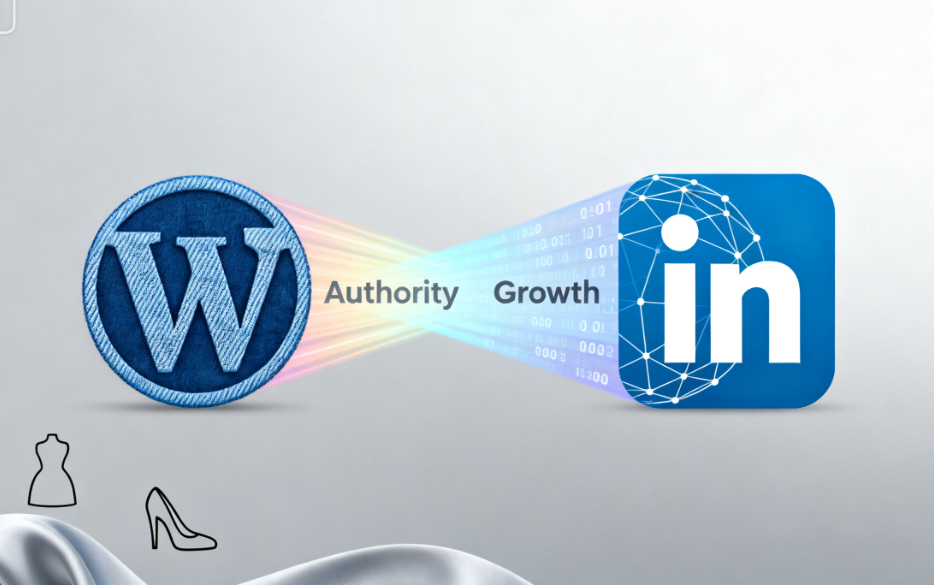
In the traditional perception of the fashion industry, official websites are digital stores for consumers, and social media are amplifiers for brand promotion. However, for modern fashion enterprises aspiring for globalization and sustainable development, this division is already outdated. A more astute strategy is emerging: integrating a deep content hub built on WordPress with the professional network covered by LinkedIn to construct an ecosystem that goes beyond direct sales, aiming to establish industry authority and drive high-quality growth.
I. Redefining the Battlefield: From Traffic Competition to Professional Influence Building
Competition in the fashion industry is no longer merely a battle for exposure. The real challenge lies in how to establish sustainable brand trust and professional authority amid the clutter of digital noise. This is precisely the strategic starting point for the synergy between WordPress and LinkedIn.
WordPress: The Brand’s Palace for In-depth Storytelling
With its unparalleled flexibility and powerful content management capabilities, WordPress allows brands to build a fully independent digital home. This is not just a showcase window for products, but a palace for in-depth content where brands tell their stories, showcase craftsmanship aesthetics, and publish industry insights. A detailed sustainable production report, a documentary recording a designer’s journey of inspiration, or an in-depth analysis of the next season’s fabric trends—all can be presented here in the most complete and immersive way.
LinkedIn: The Global Industry’s Professional Public Opinion Arena
LinkedIn brings together elites from the global fashion industry: designers, buyers, retailers, media editors, investors, opinion leaders, and high-net-worth consumers. On this platform, the core of conversations revolves around professionalism, insights, and business opportunities. It is not a square pursuing viral spread, but an elite club for building credibility and exchanging ideas.
When a brand combines the “depth” of WordPress with the “precision” of LinkedIn, it achieves a crucial leap: upgrading from mass-oriented marketing to value delivery targeting the core circles of the industry.
II. Synergy Strategy: Building a Closed Loop of “Content Creation – Precise Distribution – Value Conversion”
The synergy between the two is not a simple mutual linking, but a carefully designed combination of strategies.
1. Empowering B2B Cooperation and Talent Recruitment
This synergy is particularly significant for brands looking to expand wholesale business, find high-quality partners, or attract top-tier talents.
Practice: Create a professional “Wholesale Cooperation” or “Careers” page on the WordPress official website, detailing cooperation policies and job requirements. Subsequently, the brand can accurately promote these opportunities on its official LinkedIn page and executives’ personal accounts, directly guiding high-quality potential partners and candidates to return to the official website to submit information or applications. This path greatly enhances the efficiency and professionalism of cooperation negotiations.
2. Establishing Industry Thought Leadership
Authoritative status cannot be achieved through self-promotion alone; it must be earned by continuously delivering valuable insights.
Practice: Publish original industry white papers or trend reports on the WordPress blog. Then, on LinkedIn, distill core viewpoints in the form of images, short videos, or articles to trigger industry discussions, and attach a link to the original text: “To read the full report, please visit our official website.” This not only drives precise industry traffic to the official website but also establishes the brand’s expert image in specific fields in one fell swoop.
3. Deepening PR and Media Relationships
How to attract the attention of authoritative media to the latest collections? Passive waiting is far from sufficient.
Practice: After releasing a Press Kit on the official website, the brand team can proactively follow and connect with editors and journalists from target media on LinkedIn. Through personalized interactions, they can directly share the news link with the most critical individuals. This direct communication based on a professional platform is more effective and appropriate than traditional spam emails.
4. Precise Content Marketing and Lead Nurturing
The powerful advertising targeting capabilities of LinkedIn, combined with the conversion functions of WordPress, can efficiently capture potential customers.
Practice: Create a highly valuable industry guide (e.g., 2025 Retail Space Design Trends), host it on the WordPress website, and require visitors to leave contact information to download it. Then, through LinkedIn ads, accurately deliver it to users in positions such as “Brand Director,” “Retail Buyer,” and “Store Operations Manager,” guiding them to complete the download. This helps the sales team accumulate a list of high-quality potential customers.
III. Technical Integration: Ensuring Seamless Synergy
To ensure the efficient operation of this strategy, simple technical integration is crucial:
Social Sharing Buttons: Integrate LinkedIn sharing buttons at the end of each article on WordPress to encourage spontaneous content dissemination.
Official Display Plugins: Embed the LinkedIn Company Page plugin in the website footer to increase attention to the official page.
Data Tracking: Use UTM parameters to track traffic flowing from LinkedIn to the official website, accurately analyze the return on investment (ROI), and continuously optimize content strategies.
Conclusion
Building the Digital Cornerstone of Fashion Brands for the Future
In summary, the combination of WordPress and LinkedIn means that modern fashion brands are no longer content with being just retailers—they aspire to be creators of industry value, guides of dialogue, and builders of ecosystems.
WordPress provides the cornerstone of depth and control, while LinkedIn offers a bridge of precision and connection. For any fashion enterprise eager to not only sell products on the global stage but also win respect, build alliances, and ultimately define trends, investing in and refining the operation of these two platforms is no longer an option, but a vital strategic necessity.