
Fashion in 2050: Continuing the Legacy or Embracing Novelty?
In the era of rapid technological development, changes are surging like waves, continuously impacting every aspect of our lives. From the gradual evolution from 1G to 5G in the telecommunications field, the transformation of transportation modes from mechanical drive to fossil fuel and then to electric power drive, and the evolution of the monetary system from primitive barter transactions through stages like trading cards, gold, and paper money, and finally to the digital currency era, there are countless similar examples of changes that have long been integrated into our lives and have become an intuitive and profound part of our daily experience.
Looking back, although the current state of things may be vastly different from what it used to be, such transformations usually happen gradually. These changes often occur quietly and are not easily noticed by the public until we focus our attention and clearly recognize the great progress that has been made. However, occasionally, there will be ground-breaking technologies emerging out of nowhere. They are like bright stars, possessing revolutionary power, giving birth to brand-new paradigms, and propelling us forward in a very significant and eye-catching way. These innovative frameworks are not simply built incrementally on the existing basis. Instead, they introduce a disruptive way of thinking, allowing us to reexamine old problems, opening the door to previously unimaginable solutions, and creating unprecedented new opportunities – at least in any previous practical application level, these were all unimaginable.

Such innovations are like black swan events, just as Lenin said: “There are decades when nothing happens; and there are weeks when decades happen.” It is no exaggeration to say that 2022 and 2023 are vivid examples of such critical turning points. In the eyes of many people, the rise of generative AI undoubtedly represents such a significant transformation. At the end of 2022, generative AI models experienced through user-facing applications like ChatGPT and Midjourney emerged and continued to disrupt various industries in the following 18 months. It has fundamentally changed our understanding of “work” and even had a profound impact on some of the fundamental pillars of society, and the fashion industry is naturally no exception.
As entrepreneurs, designers, and trendsetters, the disruptive potential of this technology has compelled us to deeply reflect on the current situation and wonder what the world would look like if we used today’s advanced technologies to restart the fashion journey. How would our work processes, industry dynamics, and economic conditions change? Would the products we create become better or worse? Would they be more humanistic or less so? What would the final form of fashion be like if AI elements were incorporated into the construction of the fashion system? After preliminary exploration and attempts, would we be satisfied with some relatively conventional application cases and only achieve incremental innovation, or would we be able to successfully reshape the entire industry and prompt us to reexamine those inherent concepts that were once regarded as ironclad rules in the fashion world?

Major Challenges Faced by Brands
Firstly, let’s think deeply about a crucial question: What are the biggest challenges faced by brands in today’s era?
The brand value chain seems complex and changeable, but it actually contains certain patterns. Its complexity lies in involving numerous different stakeholders, and each party has its own unique interests and incentive mechanisms. From a simple perspective, in the past 500 years, this basic framework has remained relatively stable to a large extent. Frankly speaking, for outsiders, the whole process of fashion products from creative conception to being launched into the market appears somewhat chaotic and disorderly. However, for industry insiders, this complexity and seeming disorder are precisely the long-term operation mode of the industry and have continued to this day.
The following is a highly simplified presentation of the brand value chain in 2024. Let’s start from the background of the industry itself and gradually understand its various links.

Layer 0: Industry Dynamics
The primary challenge faced by the traditional brand value chain stems from its inherent competitive nature. Brands compete fiercely with each other to seize consumers’ mental space and wallet share, constantly driving up bids, resulting in the unit economic benefits of most participants generally being difficult to maintain at a sustainable level. At first glance, this seems to be a thorny problem that AI can hardly solve. After all, in any industry where the growth rate of the number of participants exceeds the growth rate of the market size, there will inevitably be risks of economic benefits being eroded and intensified competition in profitability. From a pure business perspective, in the fashion industry, due to the relatively low entry barriers (and the continuous downward trend), the number of brands should continue to grow until the market reaches a saturated equilibrium state. At that time, it may happen that no one really makes a profit, and weaker participants will gradually be eliminated from the market.
Layer 1: Inspiration
For most of us, the inspiration aspect is full of attraction. It is the source of creative passion. At this level, designers often wonder: What kind of works should I create? What message do I long to convey to the world? Although this aspect is obviously affected by the previous aspect (that is, market dynamics) – the actual situation of the market increasingly determines the direction of product production, it is also where the ineffable “spark of creativity” bursts out. This aspect goes through multiple stages, including the accumulation of personal experience, the generation of creative ideas, and the drawing of preliminary sketches.
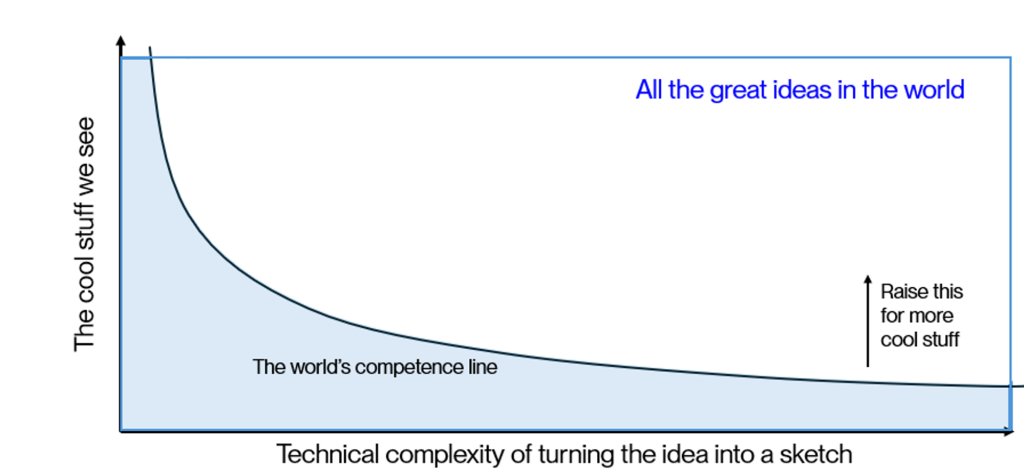
However, the challenges in this aspect are also clearly visible. Excellent creative ideas are already scarce, and it is even more difficult to obtain fair market validation according to the value of an idea. Moreover, transforming outstanding ideas into exquisite sketches requires professional technical skills that not everyone possesses. In fact, the technical threshold for transforming ideas into sketches has greatly reduced the number of inspirations that can finally be considered for developing into new products, even by several orders of magnitude.
Layer 2: Product Creation
The product creation aspect is the part that I am most concerned about. It is both highly technical and full of variables, and requires extensive and in-depth coordination and communication with numerous external participants. This aspect mainly consists of the following key stages: technical packaging and 3D design, screening and determination of manufacturers, production of golden samples (usually requiring multiple rounds of iterative optimization), and final inventory production.
It can be said that challenges run through almost the entire process! If we elaborate in detail, the following are the main pain points faced by most brands in this process:
- Transparency Issues: It is not easy to find high-quality manufacturers, and it is even more difficult to know exactly whether you have paid a reasonable price in the cooperation with them.
- Parallelization Dilemma: Each brand has to repeat the work that other brands have already done. From a functional perspective, the same technical package will be designed thousands of times by thousands of different brands, which is undoubtedly a lot of repetitive work. Each brand is constantly reinventing the wheel, resulting in a huge waste of resources.
- Skills Shortages: Technical packaging, 3D design, visualization, and simulation all require professional knowledge and skills, and the latter also requires specialized hardware equipment and software tools, which is a challenge for many brands.
- Quality Assurance Difficulties: Finding reliable manufacturing partners requires high costs because it involves complex processes such as multiple rounds of sampling inspections, in-depth understanding of product details, and clear identification of key points to ensure that the product quality meets the requirements.
- Financial Risk Hazards: Finally, the biggest challenge in this stage lies in the need to invest funds to build inventory before it is determined whether the product can be sold smoothly, which involves the issue of negative working capital. This is also the main reason why many brands decline or cannot even enter the market: Brands often have to guess the market demand, commit to large-scale production, but finally find that the products are unsalable. This situation is extremely common in the industry.
Layer 3: Commercialization
Finally, we come to the third layer: achieving product sales, that is, the commercialization stage.
Artificial intelligence has already changed the current situation in a practical and meaningful way through product recommendation algorithms, more accurate advertising positioning, dynamic pricing strategies, and other means.
The commercialization process can be roughly divided into two main stages: (i) the marketing stage, whose core objective is to create purchase intentions for products; (ii) the commercial stage, which is mainly responsible for handling various mechanical affairs in the transaction process, such as payment processing, ERP system updates, order fulfillment, product transportation, tariff optimization, and after-sales support services.
Generally speaking, the commercial stage is regarded as the relatively “boring” part of the business. At this stage, efficiency is the most critical factor, more important than any other aspect. A series of best practice methods have been formed in the industry. For most brands, the key lies in carefully following these methods rather than seeking innovation and breakthroughs. In fact, other industries have already set relatively fixed template models for creating the smoothest and seamless market sales paths.
In contrast, the marketing stage provides a broader space for creativity and experimental exploration. For example, which marketing channels should be chosen? How to carefully construct the promotional information of products? How to design visual effects that stand out? At this stage, the biggest challenge lies in how to create more attractive promotional materials faster and distribute them accurately to the target audience in the right way at the right time, so as to optimize and improve the return on advertising spend (ROAS).

Summary of Challenges
To sum up, we clearly recognize that brands need to overcome a series of complex and diverse challenges in aspects such as inspiration acquisition, product creation, and commercialization promotion. Although there are hundreds or even thousands of these challenges when considered separately (any one of them may become a bottleneck factor that hinders the final product from achieving ideal results in terms of speed, quality, creativity, or other aspects), we can summarize them into three core categories:
- Financial Risks: Mainly including (i) risks in the product development process, (ii) risks brought by inventory backlogs, and (iii) high customer acquisition costs.
- Skills Scarcity: Reflected in the lack of (i) inspiration and creativity abilities, (ii) professional skills such as sketch drawing, technology, and 3D design, (iii) professional knowledge in quality assurance, and (iv) abilities in marketing efficiency.
- Time Constraints: That is, being unable to smoothly pass through each work process at a faster speed, or even being unable to carry out the work of each layer in parallel, resulting in overall low efficiency.
Using GenAI to Propose a New Framework
Now that we have a deeper understanding of the inherent challenges in launching fashion brands or new collections, let’s explore whether and how generative AI can help us cope with these challenges.
From this perspective, the first question to think about is: Has generative AI already played a role in this regard? In the past year or so, has the world really changed substantially due to the emergence of generative AI, providing brands and retailers with AI application programs of practical value? Here are some noteworthy observations:
We have already moved from an era when only a few professionally trained designers could conceive amazing conceptual models to a new era where anyone with a certain taste has this creative ability. We often hear the statement that generative AI has “democratized” creativity (different people have very different and strong views on whether this is a good thing or a bad thing), and this is undoubtedly the most accurate and ingenious summary of it. If you want to turn your creative ideas for products into reality – whether they belong to the categories of clothing, footwear, or accessories – you can easily do so now without having to learn complex 3D drawing or modeling techniques.
We have bid farewell to the era when only with professional assistance in post-production could we create compelling marketing materials and verify consumer needs, and entered a new stage where artificial intelligence can complete these tasks in the early stage of the product life cycle with less professional skills.
We have also transformed from a world where manufacturers had almost no visibility and exposure to the final buyers to a new world where data can not only provide information for manufacturers but also help them establish close connections with buyers. Although the data itself is not directly generated by AI, more and more supply chain connection and visibility platforms are widely using AI technology to provide clear information, establish reliable accountability mechanisms, and open up new channels for participation and exposure.
We have further transitioned from a world where creative personnel might only choose to cooperate rather than compete to an era where digital creative tools, digital production methods, and community procurement platforms are readily available, making cooperation easier than ever and enabling the full utilization of innovative manufacturing methods and the collective purchasing power of traditional methods.
By sorting out and taking stock of these changes, we must recognize that some fundamental aspects of the fashion industry have changed profoundly at an unimaginable speed. Based on these facts, let’s further think about how AI can help us build a brand-new, rethought value chain system for emerging brands.
The framework proposed next is certainly not perfect, nor can it be asserted that it is the panacea for solving all the challenges in the fashion industry. However, it is a new structural model, which owes its birth to the vigorous rise of generative AI that we witnessed in the past year and closely links these new possibilities with some previous innovation achievements in the fields of design, marketing, and manufacturing that I have listed.
I firmly believe that this method has unique appeal, not only because of its innovative concept but also, more importantly, because it provides emerging entrepreneurs with a practical and effective way to reduce risks. Now, let’s call it the community-driven brand framework and discuss its significant differences from today’s fashion world together.

Layer 0: Dynamics
The traditional competitive landscape among brands, that is, the fierce competition for market share and visibility, is gradually changing into a collaborative and symbiotic ecosystem. In this community-driven dynamic environment, every new participant (whether a creator or a consumer) can add value to the entire system. Unlike the network effect that usually does not exist in traditional methods, here, the network effect has been greatly amplified because each participant is not only a simple consumer but also may become a contributor of ideas, thus enriching the entire design resource pool.
By crowdsourcing ideas and motivating all participants to jointly develop the network, this community-driven brand model has transformed the zero-sum competitive nature of the traditional multi-brand ecosystem into a positive-sum multi-creator ecosystem. In such a competitive and even somewhat brutal market environment, this may sound unrealistic, but we only need to take a look at the communities that have developed around online creators and various hobbies or the communities established around AI tools like Midjourney to find that this model is not only feasible but also may be more in line with the reality of content creation and consumption in 2024.
Layer 1: Inspiration
In a world full of generative AI, the bottlenecks that once restricted creativity are expected to be completely broken. Anyone with a certain taste and patience, regardless of their technical skill level, can create amazing product models. The market validation link, which used to be a stumbling block, can now be smoothly realized through voting on the concepts that participants expect to see in the exclusive ecosystem composed of participants, thus effectively promoting the process of market validation.
This measurable elite community creative validation process significantly reduces the risk of producing products that no one is interested in, transforms passive buyers into active participants, and, more importantly, enables creators to fine-tune their design methods according to feedback, greatly accelerating the feedback loop cycle required for their growth as designers.
Of course, in this process, we also need to fully consider social and copyright factors. But in a broader sense, the closer the connection between fashion and culture, the better the symbiotic relationship between them can be developed, and the more naturally they can integrate with each other.

Layer 2: Commercialization (Not Product Creation)
The traditional value chain has undergone significant changes at this level. The commercialization link has, to some extent, surpassed the actual product creation process.
With the powerful assistance of generative AI, the market validation stage can provide key information references for products before manufacturing. This is exactly the model adopted by on-demand producers like Shein, and if small brands can join an ecosystem that removes the delivery speed from the consumer’s purchase decision equation, they can also benefit from it.
This is undoubtedly a change with far-reaching significance. Shifting to the pre-order and on-demand production models can effectively reduce the financial risks related to inventory backlogs and unsold inventory. Commercialization has thus become an intelligent, data-driven process that can actively shape the products to be created. The sustainability advantages brought by this change, especially in effectively reducing waste, may have extremely profound impacts.
However, we must also clearly recognize that consumers will not always be willing to wait for the delivery of the products they have purchased. Although today’s shoppers are increasingly aware that fashion cannot be both cheap and fast without making the earth or others pay the final price, the essence of the fashion industry is still driven by whims and instant desires, which are as important as actual long-term planning. Just like every time someone commissions a custom on-demand occasion dress for a pre-planned wedding, there will always be situations where someone needs to receive the product earlier due to certain unexpected circumstances – just because of this.
Then, can the new Layer 3 (Product Creation) take some meaningful measures to accelerate this cycle? Can we reach an ideal state where delivery delays will not exclude such a large market segment, making the community-driven brand model truly feasible?
Layer 3: Product Creation
In the community-driven framework system, the product creation process must be agile, close, and proactive.
In this new model, the generative AI concept generation model of community-driven brands can make full use of the visual database of manufacturers’ design capabilities to quickly determine producible product solutions. When creators input their creative concepts, AI will conduct in-depth analysis of these visual historical data and accurately guide the design schemes to the nuances and functional advantages of the most suitable manufacturing partners – achieving a perfect match between inspiration and components, materials, and mechanical processes.
This AI-native system will not waste a lot of time considering variables such as cost or time like the traditional fashion value chain does; instead, it builds a direct channel between creative concepts and the proven professional knowledge of manufacturers, ensuring a smooth and efficient transition from creative ideas to physical products. As AI accesses more and more historical data, pattern styles, operation processes, component information, etc., its ability to accurately match designs with manufacturers will become more precise, thus accelerating the entire production process without affecting the advantages of manufacturers or the creative vision of creators, and without requiring anyone to completely redesign basic products like T-shirts.
Just as ChatGPT, Perplexity, and other similar companies are opening up an era of “answer engines” that is quite different from “search engines”, the continuously growing manufacturer network of this community-driven brand can also lay a solid foundation for the new “answer machine” when dealing with the problem of how to turn a given design into a mature product.
In short, the AI-native fashion model is expected to lead us into a brand-new stage, in which we no longer need to repeatedly ask those cumbersome counter-questions on the road from creative ideas to finished products. If there is no need to face these questions, how many designers, creators, and brands would choose to do so?
Conclusion
Viewed from the perspective of generative AI, each layer of the brand value chain can be infused with new vitality and functions. The acquisition of inspiration is no longer limited to a few professionals; the commercialization link can extend upstream, thus positively influencing the products being produced; and product creation transforms into a dynamic, demand-driven efficient process.
Admittedly, to achieve this ambitious goal, there is still a great deal of arduous work to be done. However, I firmly believe that there is abundant evidence, both in our personal lives and professional fields, suggesting that this is not an outlandish and unachievable fantasy. I think that reconfiguring the entire value chain around these possibilities is not only practical but also highly valuable. This heralds the advent of a new era in which community, collaboration, and creativity will be at the core of fashion innovation. More importantly, this innovative model can pave a new path for aspiring brand owners, enabling them to step more steadily into the entrepreneurial world. At the same time, it reduces the risks and resource requirements they face, allowing them to concentrate more on the seemingly “boring” but crucial parts of brand operation. Thus, it will propel the entire fashion industry towards a future filled with infinite possibilities in 2050 and beyond. As for whether we will continue from where we are now or start anew, perhaps the answer lies in our continuous exploration and application of these new technologies.